
Nigerian User Feedback: Why Silence Is Not Approval for Startups


In the world of Silicon Valley, “No news is good news.” But in the streets of Lagos, Abuja, or Port Harcourt, silence is often a warning sign of a storm.
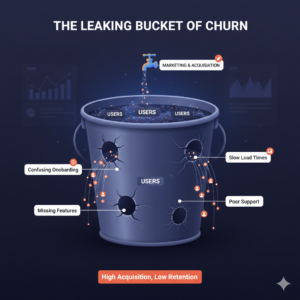
For many Nigerian founders, a lack of complaints on social media or a quiet support inbox feels like a win. You think, “People are downloading the app and they aren’t shouting, so they must love it!” Unfortunately, this is one of the most dangerous assumptions you can make. In our local context, Nigerian user feedback doesn’t always come in the form of a 1-star review or an angry tweet. Sometimes, the feedback is simply a user quietly deleting your app because they couldn’t figure out how to fund their wallet. Misreading this silence as approval is a fast track to a “leaking bucket” product.
1. The “Respect” Trap: Why Silence Happens
To master the art of collecting Nigerian user feedback, you have to understand the psychology of the Nigerian consumer. We are a polite people by nature, especially when it comes to business interactions.
-
The Culture of “Managing It”: Many Nigerians are used to sub-optimal services. If an app is slow, they don’t always complain; they just “manage it” until a better alternative comes along.
-
Fear of Repercussions: Some users worry that if they give a bad review, they might be blocked from future opportunities or rewards.
-
Unclear Channels: If your “Contact Us” button leads to a dead email address or a slow WhatsApp bot, the user won’t stress themselves. They’ll just walk away.
-
Survey Fatigue: If your surveys are boring and look like a school exam, you won’t get honest Nigerian user feedback. You’ll get “random clicks” just so the user can finish the task.
Example: A Nigerian food-tech startup saw high downloads but zero feedback. They assumed their UI was perfect. Only after running a targeted study on OpinionPadi did they realize that users hated the “auto-detect location” feature because it was never accurate for Nigerian addresses.
2. The High Cost of the “Silent Treatment”
When you ignore the silence, you aren’t just missing out on compliments; you are actively wasting money. Misinterpreting quiet users leads to:
-
Feature Misalignment: You spend millions developing a “Social Sharing” feature, while your users are actually struggling with the “Login” button.
-
The “Silent Churn” Epidemic: This is when users leave without telling you why. It is the hardest type of churn to fix because you have no data to work with.
-
Wasted Marketing Spend: You keep pouring money into Facebook ads to get new users, but they all fall through the same “silent” holes in your product.
A Nigerian e-learning platform once assumed their low engagement was just “lazy students.” After using OpinionPadi to gather real Nigerian user feedback, they found that the app used too much data for video streaming. The users weren’t lazy; they were just trying to save their data!
3. OpinionPadi: Turning “I’m Fine” into Actionable Insights
How do you break the wall of silence? You need a platform that knows how to talk to Nigerians. This is where OpinionPadi becomes your most valuable team member.
We help startups uncover the truth behind Nigerian user feedback by:
Suggested read: User Feedback for Startups: The Secret to Improving Retention
-
Providing Anonymity: When users know their identity is protected, they are 5x more likely to tell you the “ugly truth” about your product.
-
Verified Demographics: We don’t just give you “feedback”; we give you feedback from your specific target market, whether that’s Gen Z students in Benin or business owners in Aba.
-
Structured Qualitative Data: Our surveys are designed to encourage open-ended explanations, not just “Yes/No” answers. This is how you find the “Why” behind the “What.”

4. How to Get the Truth: 3 Tips for Founders
If you want to stop misreading silence, you need to change how you ask for Nigerian user feedback.
-
Ask “What Is Broken?” Not “How Are We Doing?”: When you ask “How are we doing?”, people are polite. When you ask “What is the most annoying thing about this app?”, you give them permission to be honest.
-
Incentivize Thoughtfulness: Reward users who provide detailed, helpful critiques. At OpinionPadi, we make sure that quality feedback is rewarded, which improves the data for the startup.
-
Combine Surveys with Interviews: A survey gives you the numbers, but a one-on-one interview (which you can recruit for via OpinionPadi) gives you the soul of the problem.

Conclusion: Silence is an Answer
In the Nigerian market, silence is never “approval.” It is either a lack of interest, a lack of trust, or a lack of an easy way to complain. To build a product that lasts, you must treat silence as a challenge to dig deeper. By leveraging OpinionPadi to gather authentic Nigerian user feedback, you can stop guessing and start growing.
Don’t wait for your churn rate to tell you something is wrong. Log into OpinionPadi today and start hearing what your users are actually thinking!
FAQ Section
Q: Does silence always mean my users are unhappy?
A: Not always, but in a startup environment, silence usually means “disengagement.” Happy users are often “vocal” about their success, silent users are usually just one step away from leaving.
Q: How can I encourage shy users to talk?
A: Use anonymity! If users feel they won’t be “judged” for their criticism, they are much more likely to provide honest Nigerian user feedback.
Q: Is OpinionPadi better than Google Forms?
A: Yes. Google Forms gives you a link; OpinionPadi gives you the people. We provide a verified Nigerian audience so you don’t have to go hunting for users to fill your forms.
Suggested read: Proactive Profit: How Market Research Reduces Customer Support Costs
Q: What is the most important feedback metric?
A: Look at “Actionable Frustration.” If 10% of users are all complaining about the same button, that is more important than 90% of users saying “It’s okay.”
Related Posts

Proactive Profit: How Market Research Reduces Customer Support Costs
Every Nigerian founder knows the feeling of a “blowing” support inbox. You launch a new feature at 9:00 AM, and […]

The Myths of the “Short Fuse”: What Founders Get Wrong About Nigerian User Attention Span
In the Nigerian tech ecosystem, there is a persistent myth: “Nigerians don’t read, and they have no patience.” Founders often […]

The Local Imperative: Why Foreign User Research Tools Fail in African Markets
The globalized digital economy has made it tempting for African startups and multinational corporations alike to leverage “universal” user research […]