
Why Was I Screened Out? The Psychology Behind Screening Questions

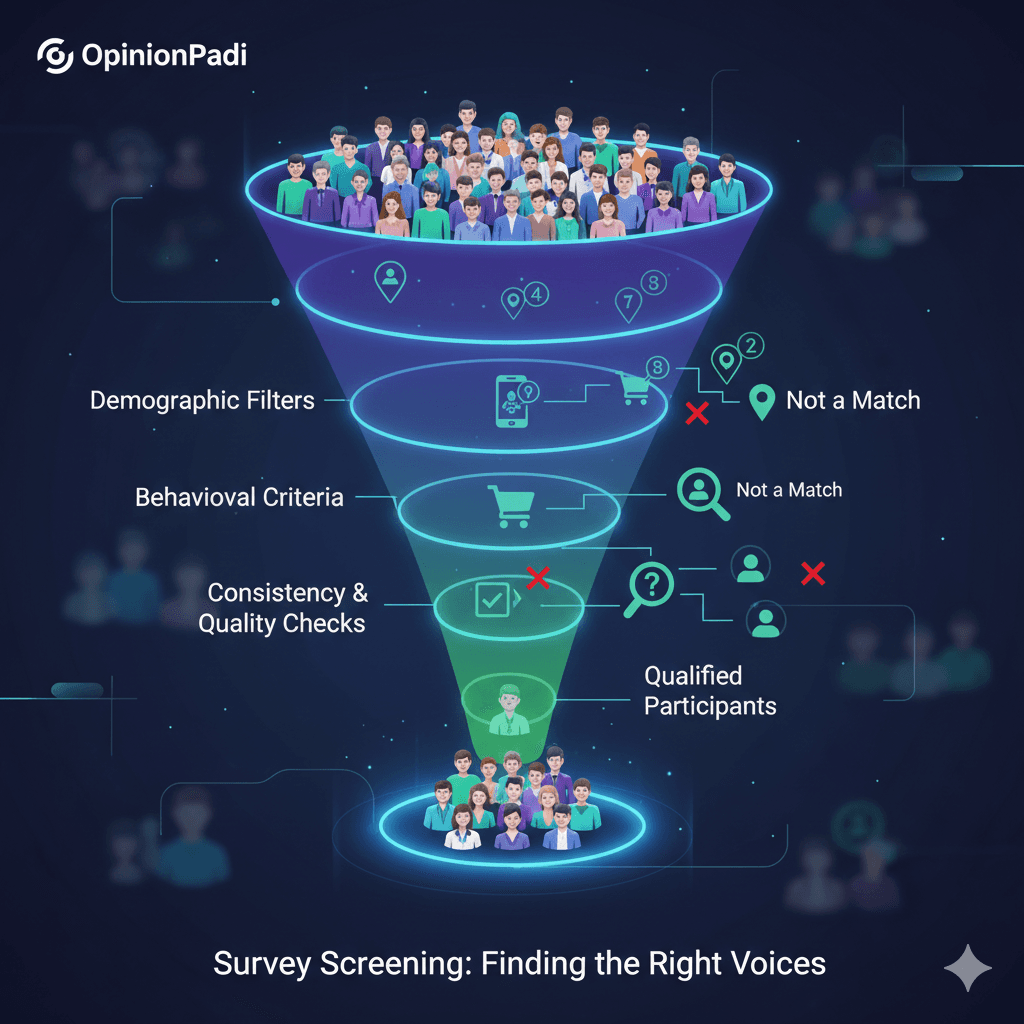
“Sorry, you don’t qualify for this survey.” It’s a sentence that has frustrated every Nigerian survey taker. You might feel like the app is playing games with you, or worse, trying to avoid paying you. However, there is a deep psychology behind screening questions that has nothing to do with “tricks” and everything to do with data science.
When a brand like Milo or MTN wants to run a survey, they aren’t looking for any opinion, they are looking for a specific one. Understanding the logic of these filters is the first step to becoming a high-earning participant.
1. The “Gatekeepers” of Research
Screening questions, or “screeners,” act as gatekeepers. Their job is to ensure that the person answering the survey actually belongs to the target audience.
Common screeners include:
-
Demographics: “What is your age and location?”
-
Behavioral: “How often do you use mobile banking?”
-
Red Herrings: Questions about fake brands to see if you are just clicking “Yes” to everything.
2. The Cognitive Logic: Why They Exist
The psychology behind screening questions is rooted in three main principles:
-
Relevance Bias: If a company is testing a new beard oil, they don’t want feedback from people who don’t have beards. It sounds simple, but without screeners, the data would be useless.
-
The Consistency Check: Algorithms look for “Cognitive Dissonance.” If you say you are 18 in one question and then say you graduated university 10 years ago in the next, the system knows you aren’t being truthful.
-
Attention Traps: “Trap questions” (like “Please select the color Blue below”) test if your brain is actually engaged or if you are “speed-clicking.”

3. Why Nigeria is a “High-Screener” Zone
In Nigeria, many users experience higher disqualification rates. This is often because researchers are fighting against “Survey Fatigue” and “Guessing Patterns.” Many users try to guess what the “right” answer is to get the reward. Ironically, this is exactly what triggers the algorithm to screen you out.
The system isn’t looking for the “right” answer; it’s looking for the true answer.

4. The OpinionPadi Difference: Human-First Screening
At OpinionPadi, we use the psychology behind screening questions to protect you, not just the brand.
-
Logic over Traps: We don’t use “trick” questions. Our screeners are transparent and easy to understand.
-
Smart Redirection: If you don’t fit a survey about cars, we don’t just kick you out. We use that data to find you a survey about something you actually use, like fashion or food.
-
Trust Scoring: The more honest you are during the screening phase, the higher your “Trust Score” goes, eventually unlocking surveys with fewer screeners!
5. How to Beat the Screener (The Honest Way)
To stop the “Disqualification Loop,” follow these psychological tips:
-
Stop Guessing: Don’t try to think like the brand. Think like yourself.
-
Slow Your Pulse: If you answer a screener too fast, the system assumes you didn’t read it. Take 3 seconds per question.
-
Be Specific: If a screener asks for your industry, choose the most accurate one, even if it feels “boring.”
6. The “Golden Rules” of High-Trust Survey Participation
To truly master the psychology behind screening questions, you must transition from a “casual user” to a “trusted panelist.” Algorithms don’t just look at one survey; they look at your lifetime behavior on the platform.
-
The “Trap Question” Awareness: Researchers often insert “Gold Standard” questions. For example, they might ask, “Which of these hobbies do you enjoy?” and include an option like “Underwater Fire-Breathing.” If you check that box just to seem “interesting,” your account is flagged. True professionals read every list carefully to avoid these traps.
-
The Nuance of “None of the Above”: Many users are afraid to select “None of the Above” or “I don’t know” because they think it leads to instant disqualification. While it might end that specific survey, it actually increases your trust score. OpinionPadi’s system notes your honesty and is more likely to send you a high-paying, specialized survey later that afternoon.
-
Avoid the “Professional Respondent” Profile: Some users try to claim they are experts in everything—banking, healthcare, farming, and tech, all at once. This is a psychological red flag. Real people have specific lives. Be okay with being a “Non-User” for certain products; it makes your “User” feedback 10x more valuable.
Conclusion: Screeners are Your Friends
Screeners ensure that the surveys you do take are relevant to your life. Once you understand the psychology behind screening questions, you can stop viewing them as obstacles and start seeing them as the path to higher quality, higher-paying opportunities.
Stop fighting the system and start winning with it.
Join OpinionPadi and get matched with surveys that actually fit your life!
FAQ Section
Q: Why do I get screened out after 5 minutes of questions?
A: This usually happens when a “deep screener” is used to find a very niche group. On OpinionPadi, we try to keep screeners under 60 seconds.
Suggested read: The Myths of the “Short Fuse”: What Founders Get Wrong About Nigerian User Attention Span
Q: If I get screened out, do I lose my progress?
A: You won’t get the full survey reward, but the information you provided helps us match you better next time.
Q: Does my location in Nigeria affect screeners?
A: Yes. Some brands only want to talk to people in specific states. This is a regional filter, not a penalty.
Related Posts

Why Honest Survey Answers Pay More Than Fast Answers
Many Nigerian survey-takers believe that the secret to maximizing their side-hustle income is speed. They open their dashboards and try […]

Which Survey Sites Offer Instant Payouts in Nigeria — and How to Use Them Safely

Online surveys have become one of the easiest ways to earn extra income in Nigeria. Many platforms pay participants for […]
How to Increase Survey Response Rate in Nigeria: Tips from OpinionPadi
Surveys are a powerful tool for gathering opinions, testing new products, and making data-driven decisions.But even the best-designed questionnaire is […]