
Proactive Profit: How Market Research Reduces Customer Support Costs


Every Nigerian founder knows the feeling of a “blowing” support inbox. You launch a new feature at 9:00 AM, and by 10:30 AM, your WhatsApp for Business is vibrating off the table and your email is flooded with “I can’t find the button” or “My money is hanging.” At this point, you aren’t just building a startup; you’re running a fire department.
The hidden truth is that reducing customer support costs doesn’t start with hiring more agents; it starts with asking the right questions before the first ticket is ever created. In the local market, where user patience is thin and data costs are high, a confusing app isn’t just a nuisance, it’s a financial drain. Let’s look at how smart research turns those “firefighters” back into “builders.”
1. The Proactive Pivot: Why Research Lowers the Burden
When you invest in reducing customer support costs through research, you are essentially buying an insurance policy for your UX.
-
Spotting “Naija-Specific” Pain Points: Western UI patterns don’t always work here. Research might reveal that your users prefer a specific local payment gateway or struggle with a certain icon.
-
Building a Better “Map”: By using surveys to see where people get lost, you can create onboarding tutorials that actually answer questions before they are asked.
-
Fixing the “Vocal Minority” Trap: Support tickets often represent the 5% of users who are angry enough to complain. Market research gives you the perspective of the “Silent 95%,” helping you fix UX issues that would have eventually led to churn.
Example: A Nigerian fintech startup noticed a surge in tickets about “missing funds.” Instead of hiring more support staff, they used OpinionPadi to survey users. They found that the “Success” screen was appearing too slowly, making users think the transaction failed. They fixed the loading speed, and reducing customer support costs became a reality as tickets dropped by 40% in two weeks.
2. The Expensive Mistakes of “Guesswork”
Skipping the research phase is like driving from Lagos to Onitsha without a spare tire, you might get there, but it’s going to cost you.
-
The Repetitive Loop: Without research, your support team spends 80% of their time answering the same three questions. That is a waste of human talent and salary.
-
The Reputation Tax: Every time a user has to contact support, their trust in your brand drops.
-
The “Feature Creep” Expense: Startups often build complex features to “fix” problems that users didn’t actually have, only to find those features create more support tickets.

3. OpinionPadi – Your Secret Weapon for Lean Support
You don’t need a million-dollar research budget to start reducing customer support costs. OpinionPadi is designed to give Nigerian startups fast, actionable insights from real people.
How we help you cut the “Support Tax”:
-
Targeted Friction Surveys: We help you ask users specifically where they felt “stuck” during your sign-up process.
-
Segmented Insights: Is the problem only happening to users in Kano? Or only to people using older Android versions? We help you pinpoint the source so you can fix it once and for all.
-
Pre-Launch Testing: Use our pool of verified Nigerian participants to “break” your features before you launch them to the general public.
4. 4 Steps to a “Quiet” Inbox
If you are serious about reducing customer support costs, follow this workflow:
-
Survey Your “Leavers”: Use OpinionPadi to reach out to people who stopped using your app. Ask them the one thing that made them give up.
-
Audit Your FAQs: If you get the same question five times in a day, your FAQ is failing. Use research to rewrite it in “Plain English” (or Pidgin!) that users actually understand.
-
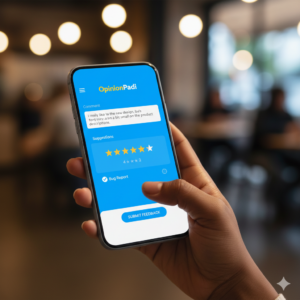
Incentivize “Bug Hunting”: Use a small portion of your support budget to reward OpinionPadi users for finding confusing UX elements. It’s cheaper to pay for a survey than to pay a support agent’s monthly salary.
-
The “First 5 Minutes” Test: Watch (or survey) how a new user interacts with your app for the first five minutes. If they can’t reach the “Aha! moment” without help, you have a support cost problem.
Conclusion: Research is a Revenue Generator
In the end, reducing customer support costs isn’t just about saving money, it’s about building a better product. When your users don’t need to call you, it’s because your product is working perfectly. By using OpinionPadi to bridge the gap between “Founder Assumption” and “User Reality,” you can keep your support team small, your users happy, and your growth consistent.
Ready to clear your inbox? Start your first OpinionPadi research project today!
FAQ Section
Q: Is market research really cheaper than hiring a support agent?
A: Yes! One well-structured survey on OpinionPadi can prevent thousands of support tickets. Preventing a problem is always more cost-effective than managing one.
Q: How often should I conduct research to keep support costs low?
A: At least once a quarter, or whenever you launch a major feature. Continuous reducing customer support costs requires continuous listening.
Q: Can research help with “technical” bugs?
A: While it doesn’t replace QA testing, it helps identify “logical” bugs, places where the code works, but the user’s brain doesn’t understand the flow.
Q: What if my users are “happy” but support is still high?
Suggested read: User Feedback for Startups: The Secret to Improving Retention
A: That usually means your onboarding is too complex. Use OpinionPadi to test a “Simplified Version” of your app and see if the ticket volume drops.
Related Posts

The Myths of the “Short Fuse”: What Founders Get Wrong About Nigerian User Attention Span
In the Nigerian tech ecosystem, there is a persistent myth: “Nigerians don’t read, and they have no patience.” Founders often […]

The Local Imperative: Why Foreign User Research Tools Fail in African Markets
The globalized digital economy has made it tempting for African startups and multinational corporations alike to leverage “universal” user research […]

Nigerian User Feedback: Why Silence Is Not Approval for Startups
In the world of Silicon Valley, “No news is good news.” But in the streets of Lagos, Abuja, or Port […]