
Continuous User Research And How It Beats One-Off Surveys

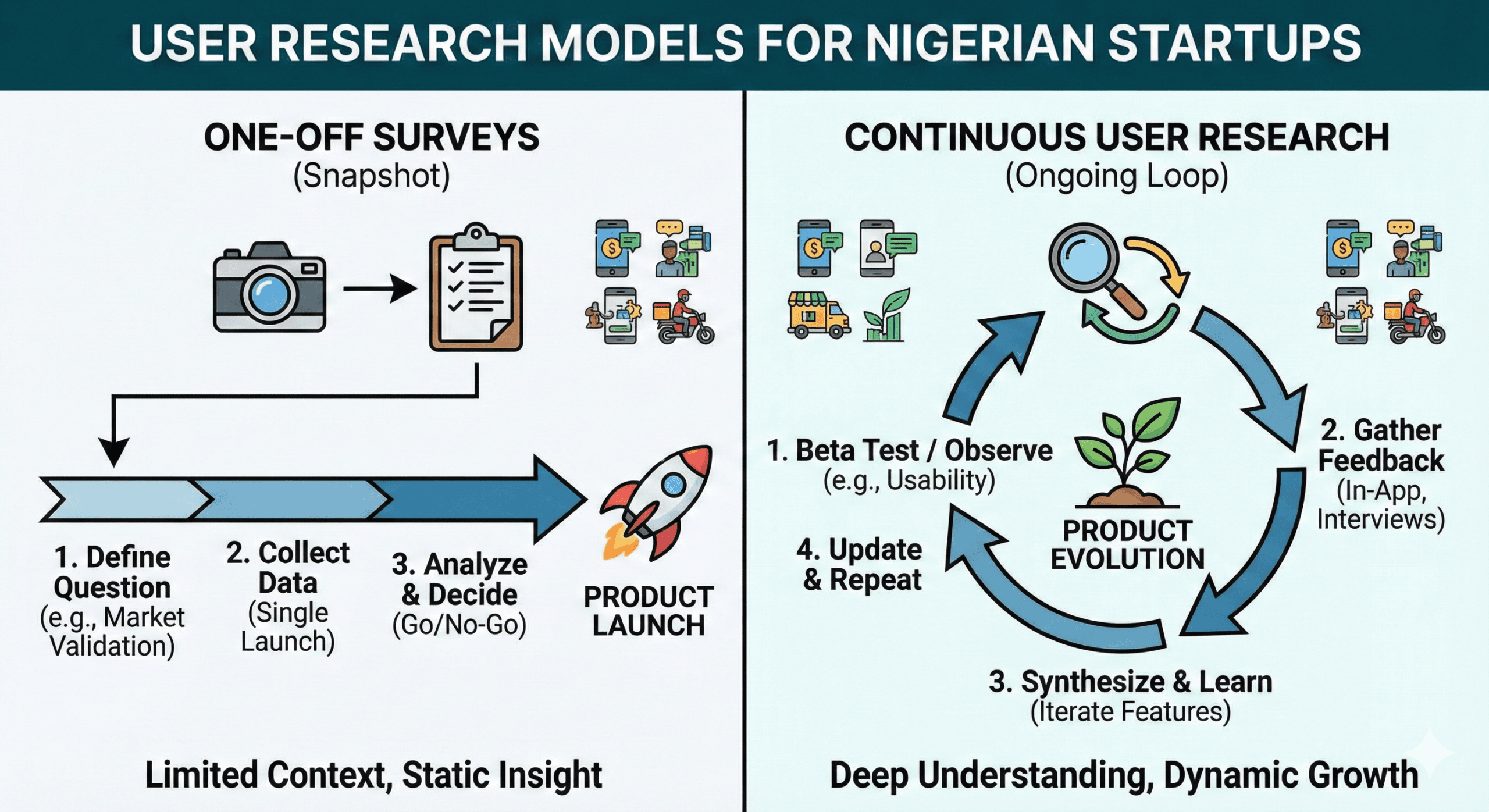
Continuous user research helps startups move beyond one-off surveys to understand real user behavior over time. While one-off surveys can offer quick feedback, they often miss trends, patterns, and evolving user needs that are critical for long-term growth.
Platforms like OpinionPadi make it easier for Nigerian startups to conduct regular, verified user research to guide decision-making.
1. Limitations of One-Off Surveys
One-off surveys provide limited data and often create a false sense of certainty. While they may be useful for initial validation, they fall short when used as the primary research method.
Key limitations include:
-
Static snapshot: One-off surveys only capture user opinions at a single point in time, ignoring how needs and behavior evolve.
-
Missed trends: They cannot identify patterns or long-term shifts in preferences.
-
Biased results: Small or unverified samples may not accurately represent the broader Nigerian user base.
-
Delayed insights: Feedback often comes too late to influence important product decisions.
-
No context over time: They fail to explain why user behavior changes after launch or updates.
Example:
A Nigerian fintech startup conducted a one-time survey before launch to understand payment preferences. Three months later, user behavior shifted due to new competitors and changing transaction habits. The original insights became partially irrelevant, highlighting the risk of relying solely on one-off research.
2. Benefits of Continuous Research
Continuous user research provides startups with a dynamic understanding of their users, allowing them to adapt quickly and confidently.
Key benefits include:
-
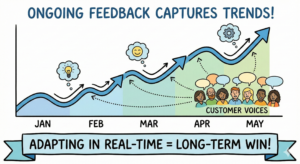
Trend tracking: Monitor how user behavior, expectations, and preferences change over time.
-
Actionable insights: Identify recurring pain points early before they escalate into serious problems.
-
Better product decisions: Continuous feedback informs feature development, UX improvements, and marketing strategies.
-
Enhanced trust: Users feel heard when they see feedback reflected in product updates, increasing engagement and loyalty.
Continuous research also enables smarter prioritization. Instead of reacting to isolated complaints, startups can identify issues that appear repeatedly and truly impact user experience. This prevents wasted development effort and ensures resources are focused on what matters most.
Example:
A Nigerian e-commerce startup collected weekly feedback through OpinionPadi and noticed repeated complaints about checkout delays. By fixing the issue early, they prevented revenue loss and improved customer satisfaction, demonstrating the ROI of continuous research.
3. OpinionPadi Enabling Ongoing Feedback
OpinionPadi allows Nigerian startups to implement continuous research efficiently:
- Verified Nigerian participants ensure reliable feedback
- Scheduled recurring surveys capture longitudinal insights
- Dashboard analytics highlight trends, preferences, and pain points
- Flexible targeting by demographics or app usage for more precise data
Example
A Nigerian fintech company used OpinionPadi for monthly user surveys. Insights from recurring research helped them adjust UX flows, improve app notifications, and refine marketing messaging, driving higher engagement and retention.
4. Tips for Implementing Continuous Research Effectively
To maximize the value of continuous research, startups should follow a structured approach:
-
Set a research schedule: Decide whether weekly, bi-weekly, or monthly surveys best fit your product lifecycle.
-
Target the right audience: Use OpinionPadi to reach verified users who actively use your product.
-
Focus on key metrics: Track retention, satisfaction, usability, and feature adoption.
-
Analyze trends over time: Compare responses across multiple periods instead of treating results as isolated data.
-
Act on insights: Implement changes based on recurring feedback to drive measurable growth.
Consistency is key. Even short, well-designed surveys conducted regularly can provide deeper insights than long, infrequent questionnaires.

5. Continuous Research as a Growth Advantage
For Nigerian startups operating in competitive markets, continuous user research is more than a feedback tool, it’s a growth strategy. Regular insights help founders anticipate user needs, adapt faster than competitors, and reduce costly product missteps. Over time, this creates products that feel user-driven rather than assumption-based.
FAQ Section
Q: Why is continuous research better than one-off surveys?
A: It captures evolving user behaviors, identifies trends, and provides actionable insights over time.
Q: Can one-off surveys still be useful?
A: Yes, but they only provide a snapshot and miss long-term patterns.
Suggested read: What Real User Feedback Looks Like Versus Vanity Metrics
Q: How does OpinionPadi support continuous research?
A: OpinionPadi provides verified Nigerian participants, recurring survey scheduling, and analytics dashboards to track trends over time.
Q: What kind of insights are best tracked continuously?
A: User satisfaction, retention metrics, UX pain points, and product preferences are most valuable for ongoing research.
Q: How often should startups conduct continuous surveys?
A: It depends on the product and audience, but weekly, bi-weekly, or monthly surveys are typical to capture meaningful trends.
Related Posts

The Biggest Mistake Founders Make When Testing Startup Ideas in Nigeria
In the vibrant tech hubs of Yaba, Ikeja, and Abuja, the energy is infectious. New apps and platforms are born […]

Build for People, Not Just for Servers: Why Early-Stage Startups in Nigeria Must Talk First
There is a common fever that hits early-stage startups in Nigeria: the “Coding Fever.” You have a brilliant idea for […]

What Nigerian Consumers Expect Before Trusting a New Brand
Building trust is critical for Nigerian brands, especially for startups entering a competitive market. Consumers rarely commit without seeing transparency, […]