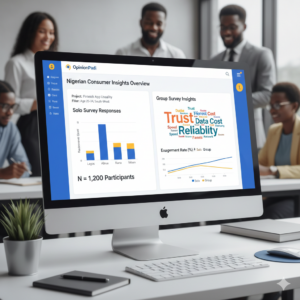
In the world of data collection, not all feedback is created equal. Choosing the right format is the difference between getting a surface-level “yes” and understanding the deep-seated motivations of your target audience. For Nigerian researchers and entrepreneurs, the debate often centers on one question: Are group surveys worth it compared to solo surveys?
Both formats offer unique advantages, but the key to a successful study lies in knowing when to prioritize scale and when to prioritize depth. In a market as diverse as Nigeria’s, understanding these distinctions is vital. Platforms like OpinionPadihave evolved to help startups and established brands navigate both formats, ensuring that every piece of data collected is both accurate and useful.
1. Solo Surveys – The Power of the Individual
Solo surveys are the traditional “bread and butter” of market research. They are designed for speed, scale, and broad reach.
Pros:
Individual Authenticity: By removing the “group” element, you eliminate peer pressure. Participants provide their honest thoughts without worrying about what others think.
Maximum Scalability: You can reach thousands of Nigerians across Lagos, Abuja, and Port Harcourt simultaneously.
Data Privacy: For sensitive topics like personal finance or health, individuals are far more likely to be candid in a private digital survey.
Cons:
Lack of Context: You see what they chose, but you don’t hear the tone of voice or the “why” behind the choice.
The “Rush” Factor: Some participants may speed through questions just to get the incentive, leading to lower-quality qualitative data.
Example: A Nigerian fintech startup recently used solo surveys via OpinionPadi to test a new app navigation feature. While the data clearly showed that users preferred a “sidebar” over a “bottom bar,” it couldn’t explain why the bottom bar felt confusing, a detail that only a conversation could reveal.
Nigerian participant completing a solo survey on their mobile device.
2. Group Surveys – Unlocking Deep Discussion
Group surveys, often referred to as focus groups, are about the “magic” that happens when people talk to each other.
Pros:
Rich, Multi-layered Discussion: Participants often spark ideas in one another. One person’s comment might remind another participant of a specific pain point they hadn’t considered.
Observational Insights: Researchers can observe body language, facial expressions, and the level of passion behind an opinion.
Idea Generation: Group settings are perfect for brainstorming new features or naming a new brand.
Cons:
Peer Influence: A “dominant” voice in the group can sometimes sway the opinions of quieter members, leading to “Groupthink.”
Logistical Complexity: Scheduling 6-10 Nigerians to be online or in a room at the exact same time requires significant effort.
Sample Size: Because they are time-intensive, you usually deal with smaller groups, which may not represent the entire population.
Example: A Nigerian ed-tech startup testing a new learning app conducted a group survey session. While solo surveys missed it, the group discussion revealed that students were deeply concerned about data costs for video lessons, a cultural nuance that led the startup to build an “offline mode” immediately.
3. OpinionPadi — The Best of Both Worlds
OpinionPadi understands that modern Nigerian startups need a hybrid approach to win. The platform isn’t just a survey tool; it’s a comprehensive research ecosystem designed to bridge the gap between solo and group formats.
Through OpinionPadi, researchers can:
Recruit Verified Participants: No more bot responses. Every participant is a real Nigerian with a verified profile.
Seamless Transition: Use a broad solo survey to identify a “hot topic,” then immediately recruit those same respondents for a deep-dive group survey.
Automated Incentives: Whether it’s a 5-minute solo poll or a 60-minute group focus session, OpinionPadi handles the rewards, ensuring participants stay engaged and honest.
Comprehensive Metrics: Access a dashboard that compares quantitative data (solo) with qualitative sentiments (group) in one view.
OpinionPadi dashboard comparing solo and group survey responses from Nigerian users.
4. Strategy: Which Format Should You Choose?
To de-risk your business, you shouldn’t choose just one. Instead, you should choose the right one for the current stage of your project.
Use Solo Surveys When: You need to validate a price point, measure brand awareness, or get quick feedback on a simple UI change.
Use Group Surveys When: You are in the “Discovery Phase,” trying to understand a complex problem, or testing a completely new product concept.
The Hybrid Method: Start with a solo survey on OpinionPadi to find a trend. Then, pick the 10 most “vocal” respondents and invite them to a group survey to explore that trend in depth.
Team planning survey approach, deciding between solo and group formats.
FAQ Section
Q: Are group surveys more expensive than solo surveys?
A: Generally, yes, because you are paying for more of the participant’s time and often a moderator’s expertise. However, the depth of insight often saves money by preventing “wrong” product decisions.
Q: Can I run a group survey virtually in Nigeria?
A: Absolutely. Many researchers now use video conferencing tools integrated with OpinionPadi to connect with users across different states without travel costs.
Q: How many people do I need for a solo survey to be “valid”?
A: For a startup, a sample size of 100-400 is usually enough to see a clear trend, provided the targeting is correct.
Q: Does OpinionPadi help with the recruitment for focus groups?
A: Yes! OpinionPadi’s strength lies in its ability to filter users by very specific demographics (age, location, occupation, interest), making recruitment for group surveys much faster.
We use essential cookies to keep OpinionPadi secure. With your permission, we'll also use cookies to remember your preferences and improve advertising relevance through Google AdSense and other partners. You can manage your choices at any time.