
Product Validation in Nigeria: Why Surveys Alone Are Not Enough


Product validation is the lifeblood of any successful startup. In the fast-paced Nigerian tech ecosystem, “speed to market” is everything, and for many developers and founders in Lagos and Abuja, the quickest path to data is a digital form.
However, there is a dangerous trap in relying exclusively on what people say in a questionnaire. In a market as complex as Nigeria, where data costs are high, power is inconsistent, and consumer trust is hard-earned, what a user clicks on a survey often contradicts what they actually do in real life. If you want to build a resilient business, you must understand why surveys are just one piece of the puzzle. This guide explores the limitations of traditional forms and how tools like Opinion Padi can help you achieve a 360-degree view of your users.
1. The “Politeness Gap”: The Limitations of Surveys
The biggest hurdle for product validation via surveys in Nigeria is “Social Desirability Bias.” Culturally, many Nigerians are inclined to be encouraging rather than critical.
Where Surveys Fall Short:
-
Surface-Level “Whys”: A survey can tell you that 80% of users want a “cheaper delivery fee,” but it won’t tell you they are willing to wait 3 days longer for it.
-
The “I Will Buy” Lie: There is a massive gap between a user saying they would pay ₦5,000 for a service and them actually entering their card details.
-
Engagement Fatigue: When a survey is too long, Nigerian users, often mindful of their data consumption, may rush through the last 10 questions just to finish, leading to “noisy” data.
2. Beyond the Form: Complementing with Qualitative Methods
True product validation requires you to get “into the room” with your users. Quantitative data (the “What”) needs qualitative context (the “Why”).
Essential Qualitative Layers:
-
Contextual Interviews: Talking to 10 users for 15 minutes each often reveals more than a survey of 500 people. You can hear the hesitation in their voice when they talk about a specific feature.
-
Focus Groups: Observing a group of Nigerians discuss a problem (like the difficulty of cross-border payments) highlights shared pain points that a pre-set survey question might have missed entirely.

3. Behavior vs. Words: Real User Testing
The gold standard of product validation is observation. You don’t ask if the button is easy to find; you watch the user try to find it.
When you observe a Nigerian user interacting with your MVP, you see the “hidden” friction:
-
Does the app take too long to load on a 3G connection?
-
Is the “Login with Google” button confusing for older demographics?
-
Do they instinctively look for a “WhatsApp Support” icon?
Behavioral data is honest. Survey data is aspirational.

4. Opinion Padi – Making Your Validation Actionable
How do you bridge the gap between “cheap surveys” and “expensive user testing”? Opinion Padi is designed to provide Nigerian builders with a more robust form of product validation.
The Opinion Padi Advantage:
-
Vetted Respondents: We filter out professional “survey takers” to ensure you are getting feedback from real, everyday Nigerians.
-
Multimedia Feedback: Instead of just text, you can ask users to record their thoughts or react to specific screenshots, bringing a qualitative feel to a quantitative tool.
-
Rapid Iteration: You can test a hypothesis in the morning, see it fail by noon, and have a new version ready to test by evening. This “fail fast” mentality is what separates successful founders from the rest.
By using Opinion Padi, you aren’t just sending a link; you are deploying a targeted strike into your market to see if your product actually survives the “street test.”
5. Practical Steps for Nigerian Builders
-
Start with the Problem, Not the App: Before you build a single screen, use Opinion Padi to confirm that the problem you’re solving is actually a “top 3” frustration for your target audience.
-
The 5-User Rule: Conduct 5 usability tests for every 100 surveys. This will usually uncover 80% of your UX flaws.
-
Mix Your Methods: Use surveys for “Breadth” (Market size, general interest) and interviews for “Depth” (Emotional triggers, specific UI hurdles).
FAQs
-
Q: Can I use Opinion Padi for B2B product validation?
-
A: Yes! You can filter for specific professions, such as “SME Owners” or “HR Managers,” to ensure your B2B concept is being reviewed by the right decision-makers.
-
-
Q: Is it better to pay users for their time during validation?
-
A: Yes. Incentivized users are more likely to provide thoughtful, complete feedback. Opinion Padi handles this incentive structure for you, ensuring a professional exchange.
-
-
Q: How do I know if my survey results are biased?
-
A: If 95% of people say they “love” your idea but 0% ask when it’s launching, you likely have a bias problem. Real validation usually comes with “constructive criticism.”
-
-
Q: How does Opinion Padi help with investor confidence?
-
A: Investors love seeing that you’ve tested your ideas with a diverse, external sample of Nigerians rather than just your “friends in the office.”
-
Related Posts

The Incentive Paradox: How Incentive Size Changes Feedback Quality
In the world of Nigerian side hustles, the rule is usually “the higher the pay, the better the job.” But […]

What Nigerian Consumers Expect Before Trusting a New Brand
Building trust is critical for Nigerian brands, especially for startups entering a competitive market. Consumers rarely commit without seeing transparency, […]
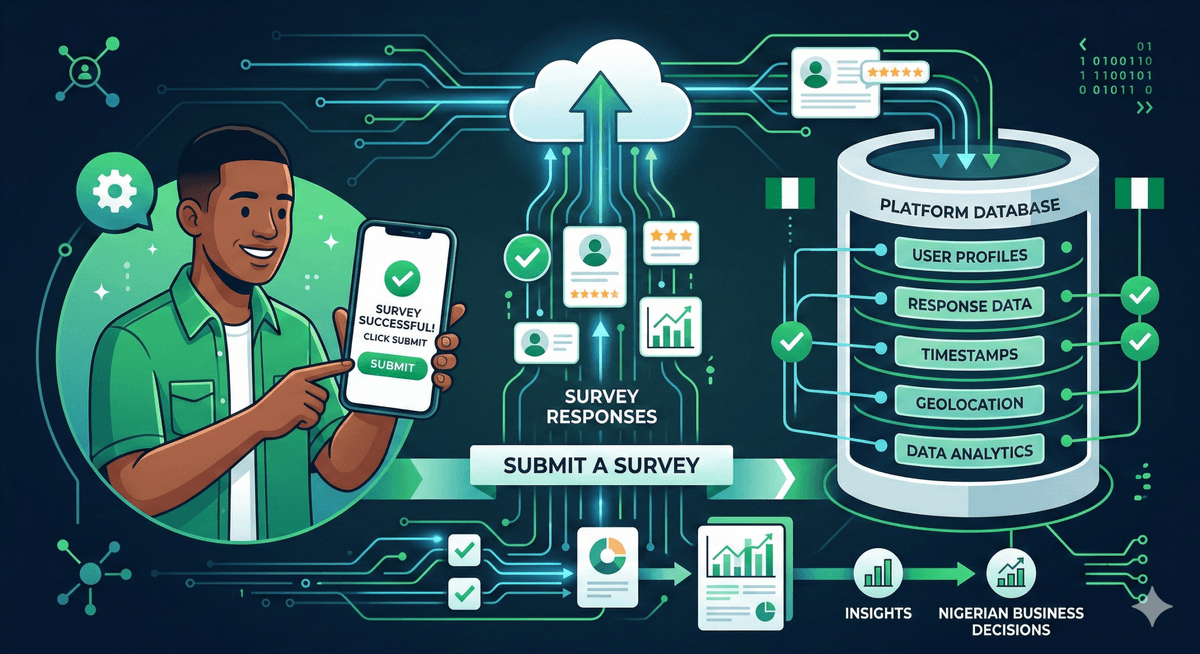
What Happens After You Submit a Survey: A Full Backend Breakdown
For most people, the journey of a side-hustle task ends the moment they hit the blue button. Have you ever […]